


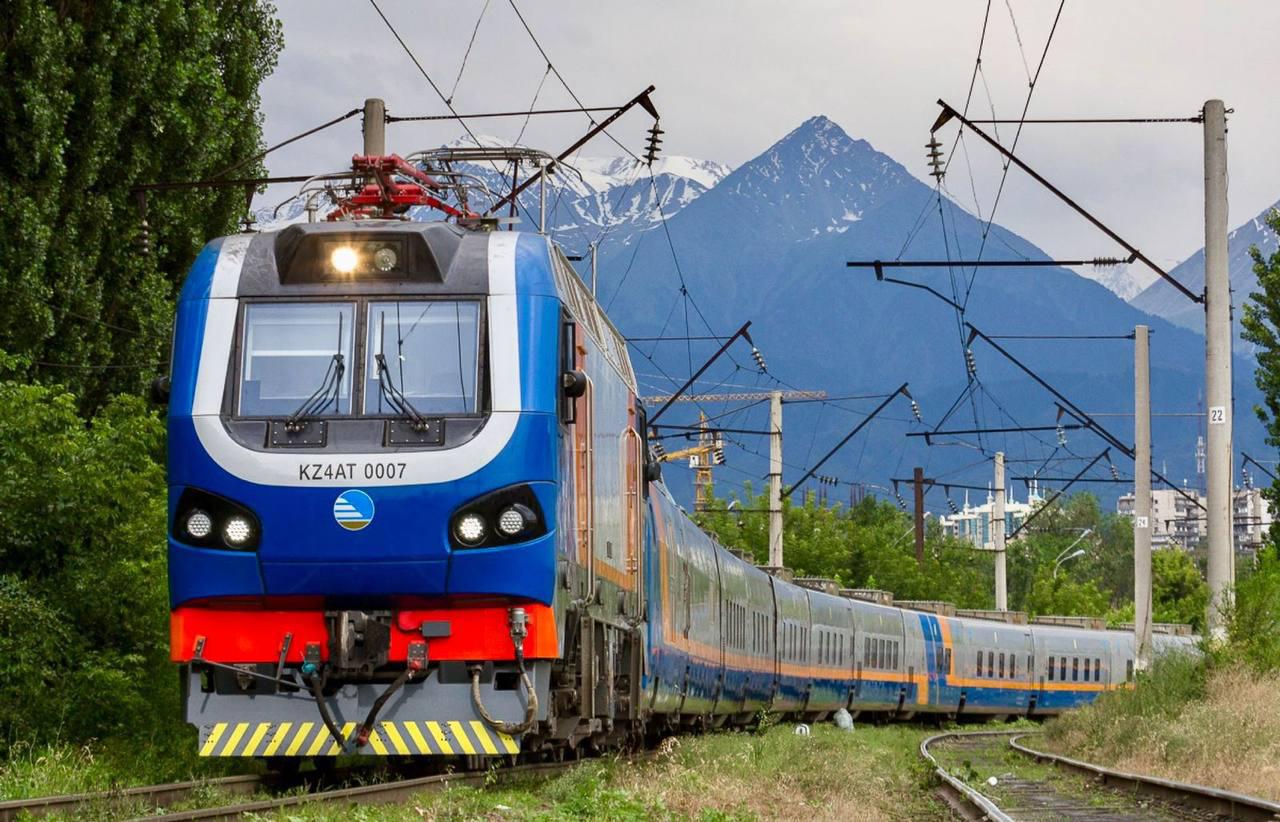

BAKU, Azerbaijan, September 22. The European Union’s decision to mobilize up to 12 billion euros for the development of the Middle Corridor has become one of the most notable signs of this route’s growing importance for European transportation and trade policy. European Commission President Ursula von der Leyen, delivering her annual State of the Union address, announced a new international connectivity project designed to directly link the South Caucasus and Central Asia to the European market.
“Today, I can announce a new international project in the field of transport connectivity. It will directly connect the South Caucasus and Central Asia to the European market, what we call the Middle Corridor. Through the Global Gateway, we intend to attract up to 12 billion euros in public and private investment. Our goal is to diversify routes, triple trade flows, and significantly reduce cargo transit times by 2030,” she stated.
In response to a Trend's inquiry, the European Commission clarified that the announced amount includes both public and private investments. At the same time, officials in Brussels expect that collaboration with partner countries, international financial institutions, and the private sector will secure more than 12 billion euros in investments for the corridor. Thus, this is not merely a matter of financing a single transport route. The EU effectively views the Middle Corridor as part of a broader system for diversifying trade links, designed to make supply chains between Europe and Asia more resilient, faster, and more predictable.
It is precisely in this context that Azerbaijan’s role stands out. Geographical location alone does not make a country a transportation hub. For the Middle Corridor to become attractive to international business, it was necessary to transform Azerbaijan’s location between the Caspian Sea, the South Caucasus, and Türkiye into a functioning multimodal system.
In recent years, Azerbaijan has consistently invested in its railway, port, road, and logistics infrastructure. Key elements include the Baku International Commercial Seaport, the Baku–Tbilisi–Kars Railway, the Caspian Fleet, logistics centers, and the modernization of the railway network. The modernization of the Baku–Tbilisi–Kars line is of particular importance here. Upon completion of the project, the line’s capacity was increased to 5 million metric tons per year. This allows the Azerbaijani section to be viewed not merely as a potential link in a future route, but as infrastructure designed to handle growing transit traffic.
Port infrastructure is also developing in parallel. According to data from Azerbaijan’s Ministry of Digital Development and Transport, from January through July 2026, container throughput at the port of Alat grew by 20% year-over-year, reaching 72,370 TEU, while dry cargo transshipment increased by 82%, reaching 1.4 million metric tons. This is of fundamental importance for the Middle Corridor, as its competitiveness is determined not by a single section of the railway or a single sea crossing, but by the ability of the entire chain to operate in sync.
The main result — not just kilometers, but also time
For a shipper, a geographically short route does not necessarily mean an attractive route. Delivery times, cost, predictability, and the ability to track the shipment throughout its journey are of decisive importance. That is why digitalization has become Azerbaijan’s next area of focus.
The country is implementing electronic transport and transit tools, including e-TIR, e-CMR, e-Permit, and e-CIM/SMGS electronic waybills. A “Single Window” information system has also been created—a digital logistics platform designed to speed up document processing and simplify interaction among participants in the transportation process.
Azerbaijani authorities note that, thanks to infrastructure and digital reforms, the transit time for cargo along the China-Europe route—which stood at 38–53 days a few years ago—has been reduced to an average of 12 days.
It is precisely these changes that are transforming the Middle Corridor from a geographical alternative into a commercially more predictable route. In essence, Azerbaijan is working to reduce one of the main risks for shippers: uncertainty.
The growth in freight volume indicates that demand is already taking shape. According to data from the Kazakhstan Railway Company, 44,200 TEU were transported via the Trans-Caspian International Transport Route in the first eight months of 2026, including 419 container trains from China. Compared to the same period in 2025, container traffic volume increased by 58%, and the number of container trains rose by 84%. At the same time, route participants are already discussing increasing the number of container trains from China to 600 in 2026 and to 800–1,000 in 2027.
For Azerbaijan, this means the need to develop not only its own segment but also to coordinate the entire supply chain — from the Caspian ports to the Caucasus rail lines and onward access to the European market. This is precisely why the Azerbaijan Railways’ work on tariffs, attracting return cargo, coordinating with ports and partners, and efforts to more actively reach out directly to shippers in the European market are of particular importance. This is an important stage: while the initial focus was on attracting Chinese and Central Asian cargo, the route’s participants are now striving to ensure a more balanced flow in both directions.
Azerbaijan is reducing the fragmentation of the route
One of the long-standing challenges of the Middle Corridor is that it passes through several countries and includes rail, maritime, and road segments. Therefore, the efficiency of the entire route depends not so much on any single country as on the coordinated actions of all its participants. In this regard, Azerbaijan is striving to serve not only as a transit territory but also as one of the coordination hubs.
Infrastructure modernization is accompanied by negotiations on tariffs, digitalization, border procedures, data exchange, and the synchronization of transportation systems. The TITR working group, which includes railway administrations, ports, shipping companies, and logistics firms from the countries along the route, is now discussing not only infrastructure construction but also specific issues related to its joint operation.
Why has the Middle Corridor become more important for Europe right now?
The EU’s growing interest in this route cannot be separated from changes in global trade. Following the outbreak of the war in Ukraine, European companies and institutions were faced with the need to diversify transport routes between Europe and Asia. Disruptions to traditional maritime supply chains, including the situation surrounding the Red Sea, created additional pressure. As a result, the issue of supply chain resilience has moved beyond the scope of transportation policy alone. For Europe, having multiple alternative routes has become a key component of economic resilience.
At the same time, the Middle Corridor has one important advantage: it connects China and Central Asia to the European market via the Caspian Sea, the South Caucasus, and Türkiye. Its development therefore addresses several EU objectives at once: diversifying routes, strengthening trade ties with Central Asia and the South Caucasus, and reducing dependence on specific transport routes. The European Commission explicitly links the new initiative to the need to diversify routes, triple trade flows, and reduce transit times by 2030.
In January 2026, the European Union and Azerbaijan agreed to strengthen cooperation within the framework of the Global Gateway, including in the areas of transportation, digital, energy, and trade connectivity. At that time, with the participation of the EBRD, work began on a feasibility study for the Nakhchivan Railway as part of the broader Trans-Caspian transport connectivity initiative. Thus, the current decision to mobilize up to 12 billion euros does not appear to be an isolated step, but rather a continuation of the European interest in regional connectivity that was already taking shape.
TRIPP could add another level of connectivity to the corridor
The development of new transportation links in the South Caucasus is another contributing factor.
In this context, the Trump Route for International Peace and Prosperity (TRIPP) deserves special attention. The document describes TRIPP as a route intended to promote regional integration and trade development. For the Middle Corridor, the significance of TRIPP lies primarily in the potential expansion of the South Caucasus’s transportation network. It is precisely this network effect that is particularly important for the EU: the corridor’s value increases as it ceases to be a single, fixed chain and transforms into a system of interconnected routes.
In recent years, Azerbaijan has consistently expanded its infrastructure capacity, modernized its rail and port facilities, developed its Caspian Fleet, digitized transit procedures, and participated in coordinating the activities of the route’s participants.
The result was a combination of several factors that are particularly important for European businesses: shorter transit times, increasing throughput capacity, digitalization, the expansion of multimodal capabilities, and a gradual improvement in the predictability of shipments. According to data from the Ministry of Digital Development and Transport, the total volume of transit cargo through Azerbaijan from January through July 2026 exceeded 9.1 million metric tons, reaching its highest level in the past five years. At the same time, shipments along the East–West Corridor grew by 16.5% year-over-year. This points to a significant shift: Azerbaijan is no longer merely offering the EU a geographically advantageous location. It is establishing the infrastructural and institutional framework that enables this location to serve the interests of international freight flows.
This is precisely why the European initiative, worth up to 12 billion euros, represents a logical next step.
Brussels is effectively shifting from supporting individual elements of transport connectivity to attempting to scale up the entire system — from Central Asia through the Caspian Sea and the South Caucasus to the European market.
For Azerbaijan, this represents both recognition of the work already done and a new challenge. The more European and Asian cargo that flows along the route, the higher the demands on its speed, cost, and reliability.
Consequently, the next stage in the development of the Middle Corridor will no longer be determined solely by infrastructure construction. The route’s competitiveness will depend on how successfully the countries involved can harmonize tariffs, digital systems, border procedures, and maritime and rail transport, as well as ensure traffic flow in both directions. It is precisely this transition from a separate transit route to a unified, predictable, and interconnected system that explains why the Middle Corridor is now becoming one of the priority areas of European connectivity policy.