


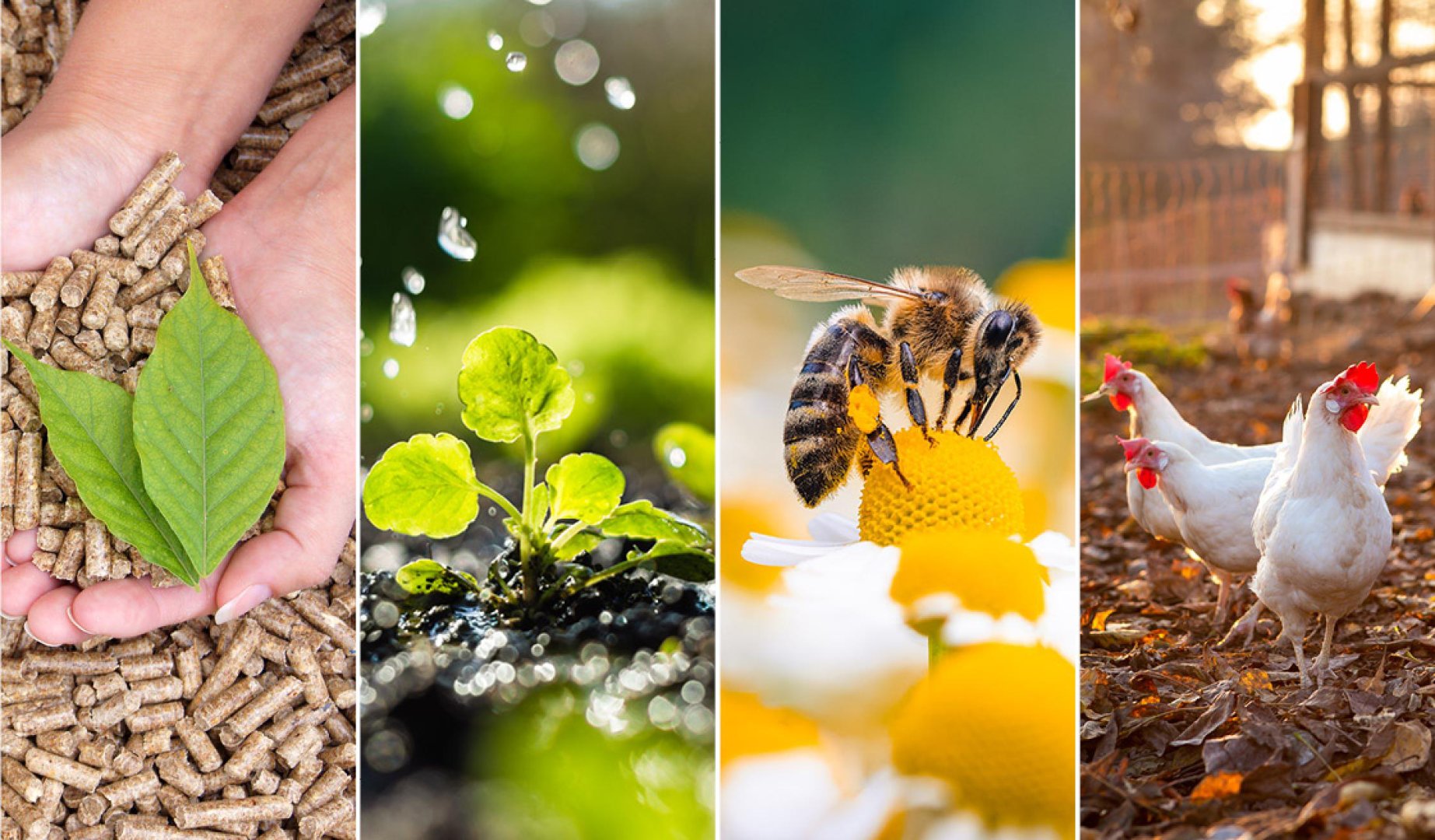

BAKU, Azerbaijan, August 19. Kyrgyzstan increased agricultural production by 4.3% year-on-year in the period from January through June 2026.
This was reflected in a press release issued by the Eurasian Economic Commission (EEC).
The country recorded the third-highest growth among EAEU member states, following Belarus at 4.7% and Kazakhstan at 4.4%.
Agricultural production across the EAEU increased by 0.3% during the reporting period. Armenia and Russia recorded declines of 10.9% and 0.8%, respectively.
Kyrgyzstan was among the three EAEU countries where production of livestock and poultry for slaughter and milk increased in January-June 2026.
Meanwhile, agriculture remains an important part of Kyrgyzstan's economy, providing employment, supporting domestic food supply and creating opportunities for exports. In recent years, the country has also placed greater emphasis on developing agricultural processing and increasing the share of products with higher added value.
The sector's development is increasingly linked to cooperation with foreign partners, particularly Russia, as well as to investment in processing facilities, modern agricultural technologies and logistics infrastructure. Growth in livestock and milk production also creates opportunities for expanding food processing and strengthening supply chains.
Trend’s analysis suggests that the latest increase in agricultural output could gradually shift the focus from simply expanding production toward developing the infrastructure needed to process, store and export agricultural goods. Higher output requires sufficient processing capacity, storage facilities, reliable transport links and access to energy for agricultural and food-processing enterprises.
This is particularly important for a landlocked country such as Kyrgyzstan. As agricultural production grows, improving connectivity with external markets becomes increasingly important for producers seeking to expand beyond domestic demand. Better logistics could help reduce transportation costs, improve the movement of perishable products, and support the development of longer agricultural supply chains.
At the same time, further growth in processing will increase demand for reliable electricity. This means that agricultural expansion could increasingly be accompanied by investment not only in farms and processing facilities, but also in transport, storage and energy infrastructure.